
Sonic Pico Park Walkthrough: All 15 Worlds and 60 Levels
A world-by-world Sonic Pico Park walkthrough: what each of the 15 worlds tests, the mechanic it introduces, and how to keep a 2-8 player group moving.
SONIC PICO PARK has fifteen worlds with four stages each, for sixty co-op stages in total. The worlds are numbered, not named on the level select, but each one has a title on the world screen and a clear mechanical theme. The campaign moves from movement tutorials to flight, water, Chao escort, timing puzzles, rails, darkness, enemies, minigames, and a final boss.
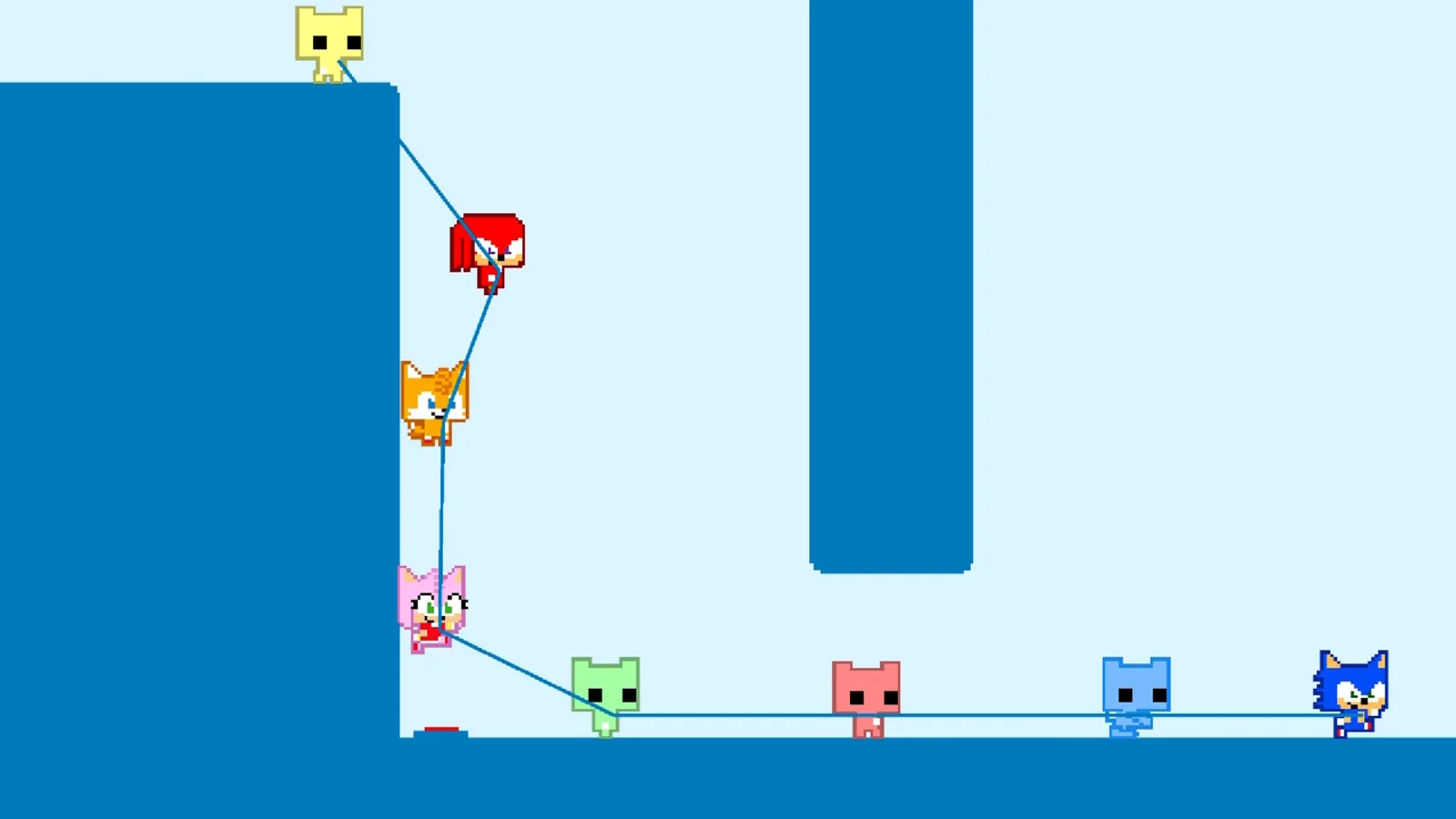
This walkthrough is organized by world rather than by individual stage. Each world page covers the four stages, the mechanic they share, the co-op jobs that solve them, and the failure states that cost groups the most time. The first four worlds have dedicated pages; the rest are summarized here with the same structure.
The goal plate needs every player. No world changes that rule, and no world is solved by one player running ahead.
Campaign structure
The world-select screen splits the fifteen worlds into three pages: 1-6, 7-12, and 13-15. Each world shows four stage slots, a clear count, and a star count. Clearing a world unlocks the next one and an achievement named after that world.
| World | Title | Mechanic it teaches | Achievement |
|---|---|---|---|
| 1 | HELLO, SONIC PICO PARK | Movement, Spin Dash, loop, flight | HELLO, SONIC PICO PARK |
| 2 | SONIC PARK | Loops, spikes, item monitors, stacking | SONIC PARK |
| 3 | GO TOGETHER | Wall climbing, ordered switches, tether | GO TOGETHER |
| 4 | CARRY PARK | Hanging platforms, cracked walls, gates | CARRY PARK |
| 5 | SONIC PARK 2 | Glide, springs, water hazards | SONIC PARK 2 |
| 6 | GO! | Swimming, numbered gates, cracked blocks | GO! |
| 7 | LARGE PARK | Chao containers, escort, vertical routes | LARGE PARK |
| 8 | GO! GO! | Slopes, water gates, timed counters | GO! GO! |
| 9 | THINKING PARK | Counters, ghosts, limited-action puzzles | THINKING PARK |
| 10 | GO! GO! GO! | Rails, dismounts, loops, falling platforms | GO! GO! GO! |
| 11 | RULE PARK | Darkness, light circles, rule-based rooms | RULE PARK |
| 12 | ENEMY PARK | Badniks, speed meter, spike corridors | ENEMY PARK |
| 13 | MINI GAME | Arena rounds, Blue Sphere checkerboards | MINI GAME |
| 14 | HERO PARK | Industrial routes, spikes, marked paths | HERO PARK |
| 15 | LAST PARK | Rising hazards, speed control, final boss | LAST PARK |
The world titles are the same names used by the achievements. If you are hunting the full list, clearing each world is the first fifteen unlocks.
Worlds 1-4: the tutorial arc
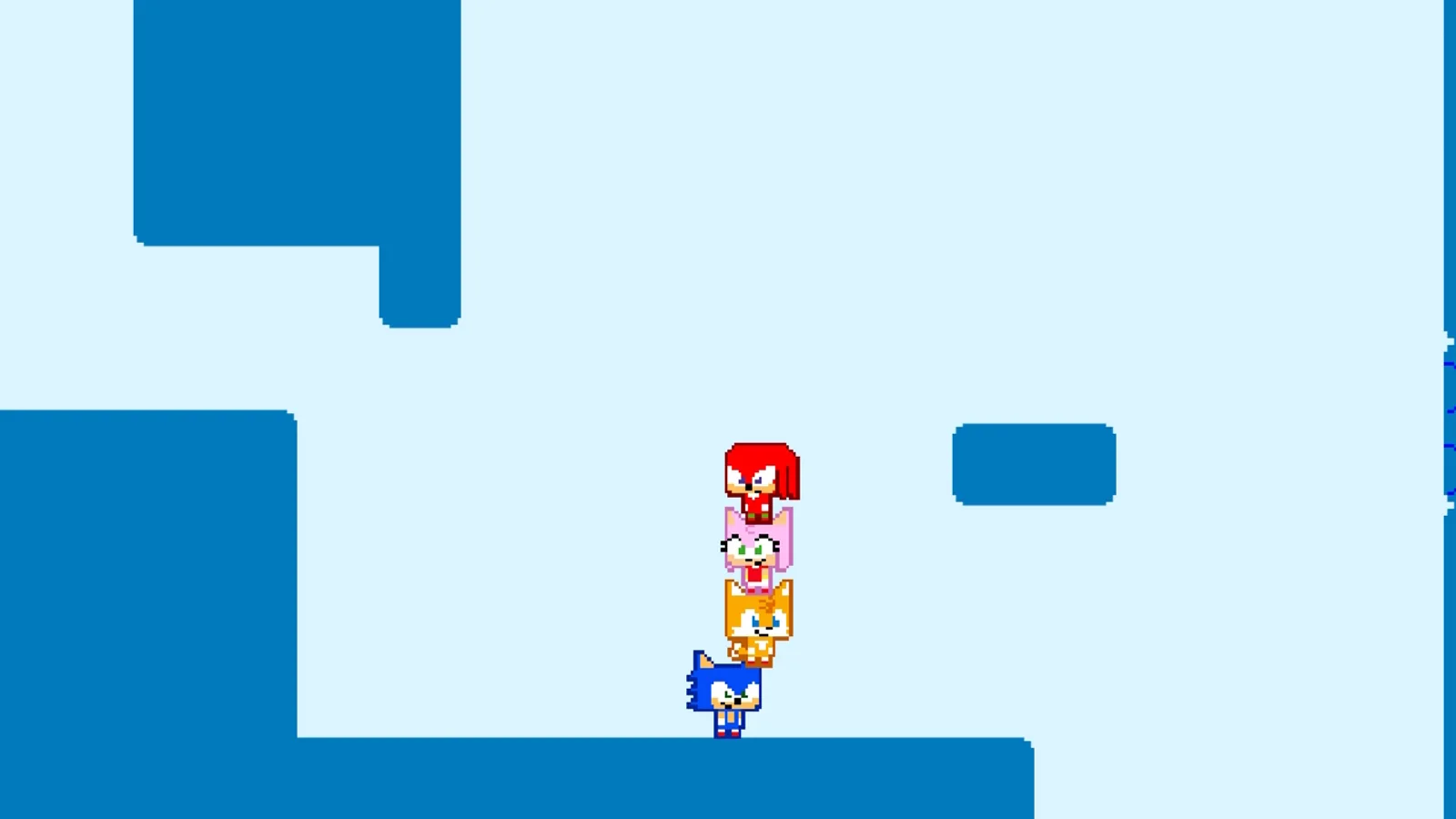
The first four worlds teach the game's vocabulary. They are short, forgiving, and the best place to learn with a new group. Each has a dedicated page:
- World 1: Hello, Sonic Pico Park → covers the Spin Dash, the first loop, the ring-sharing prompt, and the flight carry.
- World 2: Sonic Park → covers loops, spike rows, item monitors, and the first vertical stack.
- World 3: Go Together → covers wall climbing, the numbered 1-2-3-4 switch room, and the tether stage.
- World 4: Carry Park → covers hanging platforms, cracked walls, gate switches, and ramps.
If your group is struggling in a later world, the problem is usually one of these four lessons. A group that cannot stack cleanly will fail World 7. A group that cannot ferry with a flyer will fail World 5.
Worlds 5-6: glide and water
World 5, SONIC PARK 2, introduces Knuckles' glide with a hold prompt in the first stage. The world pairs long descents with red springs and high ledges, and the fourth stage puts water or acid below the platforms. The lesson is altitude: a glide is not a lift, so the group has to use springs to gain height and the glide to cross.
World 6, GO!, introduces swimming and water gates. The stages are built around flooded rooms, gates marked with a number, and cracked blocks that need a Spin Dash. The water changes the pace: movement is slower, the camera is tighter, and a player who panics can drown the group's momentum. The numbered gates are the first place where the ring count becomes a hard requirement rather than a bonus.
Worlds 7-8: escort and timing
World 7, LARGE PARK, is the Chao world. The stages feature black Chao containers, Chao that need to be moved or escorted, and cracked blocks that open routes. The Chao is the first escort object in the campaign: it does not solve the room for you, and it can be lost if the group moves too fast. The vertical routes reward a flyer and a patient anchor.
World 8, GO! GO!, mixes slopes, water gates, and a visible counter that starts around 0.57. The counter is the first timed puzzle: the group has to move before it expires or hit a target before it runs out. The fourth stage is a flight room, which makes the world a test of the two abilities the group has been building since World 1.
Worlds 9-10: thinking and rails
World 9, THINKING PARK, is the puzzle world. The stages use counters at 0 and 0.50, dark characters, and three white ghost enemies that patrol above the group. The counters are the tell: the room is asking for a specific number of actions, players, or seconds. The ghosts punish a group that rushes the platform section without clearing the route.
World 10, GO! GO! GO!, is the rail world. The first stage prints a dismount prompt while the characters ride a rail, and the later stages combine rails with loops, springs, red enemies, and falling platforms. The dismount is the skill: a player who stays on the rail too long rides into a hazard, and a player who dismounts too early lands in a gap.
Worlds 11-12: rules and enemies
World 11, RULE PARK, is the darkness world. The stages are black rooms with a small lit area, counters such as 24, and numbers on the walls. The light circle around each character is the only visibility, which means the group has to move as a cluster rather than spread out. The numbers are the rule: a room may allow only a certain number of players in the light, or require a specific count to open a path.
World 12, ENEMY PARK, adds combat pressure. The green Badniks patrol the platforms, and the later stages add a speed meter and spike corridors. The Spin Dash is the answer to the Badniks, but the dash is also the fastest way to run into a spike. The world is the first one where the group has to clear enemies before solving the platforming, rather than the other way around.
Worlds 13-14: minigames and hero routes
World 13, MINI GAME, is the campaign's competitive detour. The four stages use the Battle mode formats: arena rounds with heart and ring counters, and Blue Sphere-style checkerboard rooms with ring targets of 20 and 25. The world is a break from the campaign's coordination puzzles, and it is the best place to learn the Battle mode before playing it with a group.
World 14, HERO PARK, is the industrial world. The stages use gray factory routes, long spike rows, item boxes, colored triangle markers, and a green goal flag. The colored markers are route hints: they show the intended path through a spike corridor. The world is less about a new mechanic and more about executing the existing ones under pressure.
World 15: the final world
World 15, LAST PARK, is the finale. The first stage climbs a shaft with rising red spikes, the second prints WATCH YOUR SPEED! while spikes hang above the route, and the third is a giant robot boss with a health bar. The fourth stage is a final staircase to the goal flag.
The boss is the only traditional health-bar fight in the campaign. The group has to damage the robot while avoiding its attacks, and the fight rewards a flyer who can reposition a teammate and a dasher who can punish the openings. The final staircase is a victory lap, not a puzzle; enjoy it before the achievement pops.
How to use this walkthrough
Start with the world page for the world you are stuck on. Each page follows the same structure: the mechanic, the four stages, the co-op jobs, the common failures, and a decision tree for the room that will not break. If the group is failing across multiple worlds, read the tips guide → before the next session.
The level count and length guide → gives a realistic time estimate for the full campaign. The achievements guide → lists every unlock and the fastest route to the full set.
Official source: SONIC PICO PARK official site ↗
Official source: Steam store page ↗
Siliconera's review ↗ confirms the sixty-stage structure and discusses the world pacing. MonsterVine ↗ covers the mechanic progression. The Nintendo product page ↗ confirms the platform and player range.
FAQ
How many worlds are in Sonic Pico Park?
Fifteen worlds, four stages each, for sixty stages total.
How long does the campaign take?
A coordinated pair can finish in roughly two to four hours. A larger group takes longer because of coordination, not difficulty.
Do you have to clear every stage to finish the game?
Yes. The worlds unlock in order, and the final world requires the previous fourteen.
Are there boss fights?
Yes. World 15 has a giant robot boss with a health bar, the only traditional boss fight in the campaign.
Can you replay worlds?
Yes. The world-select screen lets you replay cleared worlds and stages.