
Sonic Pico Park World 3 Guide: Go Together Solutions
Sonic Pico Park World 3 walkthrough: the partner wall climb, the numbered 1-2-3-4 switch room, and the tether stage that keeps two players in sync.
World 3 is the cooperation world. The four stages are built around a partner wall climb, a breather platform stage, a numbered 1-2-3-4 switch room, and a tether stage. The title, GO TOGETHER, is the instruction: every room in this world fails if one player tries to solve it alone.
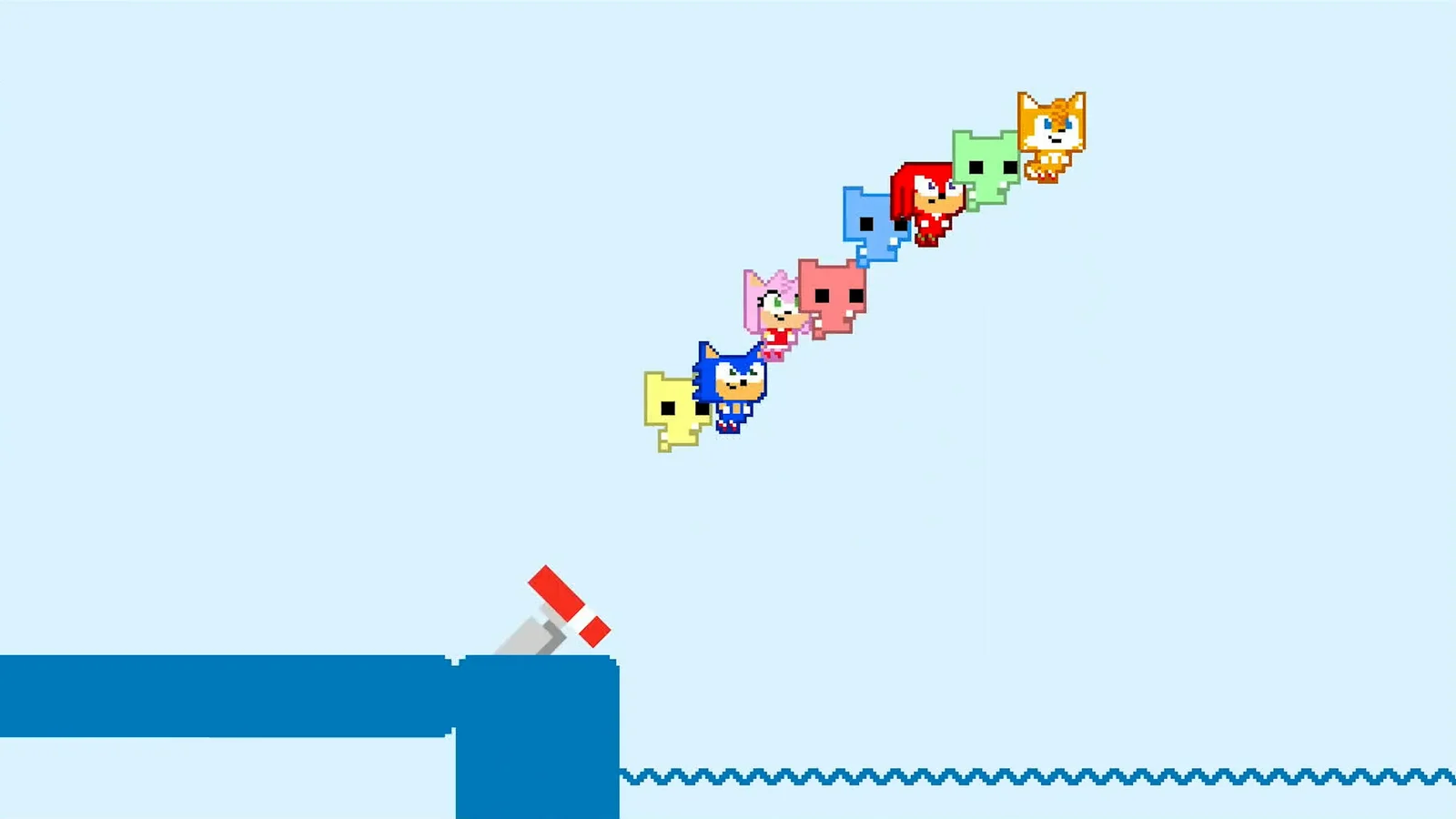
The world is the first one that cannot be brute-forced by a single skilled player. The switch room requires two players, the tether requires two players, and the wall climb requires a partner to stand on. A group of two can clear it; a group of eight will spend more time coordinating than climbing.
Two players minimum, one caller, and no one runs ahead of the tether.
Stage 3-1: the partner wall climb
The first stage is a vertical wall with a ledge above. The room shows two characters against the wall, which is the hint: one player becomes the step for the other.
The solution
- Player A stands against the wall.
- Player B jumps onto Player A's head.
- Player B jumps from the head to the ledge.
- Player B reaches down or drops a path for Player A.
- If the ledge is too high for one boost, repeat the stack.
The climb is a two-player action. A solo player cannot reach the ledge, which is why the stage is the first hard gate in the campaign. The player on the bottom should hold still; the player on top should jump straight up rather than forward.
Common failure
The common failure is jumping forward off the partner's head. The ledge is above, not across. Jump straight up, then move onto the platform.
Stage 3-2: the breather
The second stage is a simple platform route with no new mechanic. It is a breather between the wall climb and the switch room, and it is the best place to reset the group's patience.
The solution
- Move through the platforms at the group's pace.
- Wait at the plate for everyone.
- Use the stage to practice the count: "one, two, three, all here."
Do not overthink this stage. It exists to give the group a win before the switch puzzle.
Stage 3-3: the numbered switch room
The third stage is the first ordered-switch puzzle. Four boxes are numbered 1, 2, 3, 4, and the group has to press them in numerical order. A wrong order resets the sequence, which is why the room feels harder than it looks.
The solution
- Assign one player to each box, or assign one player to call the order.
- Press box 1 first. Wait for the visual confirmation.
- Press box 2. Wait.
- Press box 3. Wait.
- Press box 4. The path opens.
- Regroup before the plate.
The boxes are pressure switches, not buttons. A player has to stand on the box long enough for the game to register the press. A player who taps the box and moves on may not trigger it.
Common failure
The common failure is pressing the boxes out of order because two players move at once. The fix is a caller: one player says the number, one player presses, and the rest stay off the boxes. In a large group, the extra players should wait on the safe platform, not crowd the switch area.
Stage 3-4: the tether
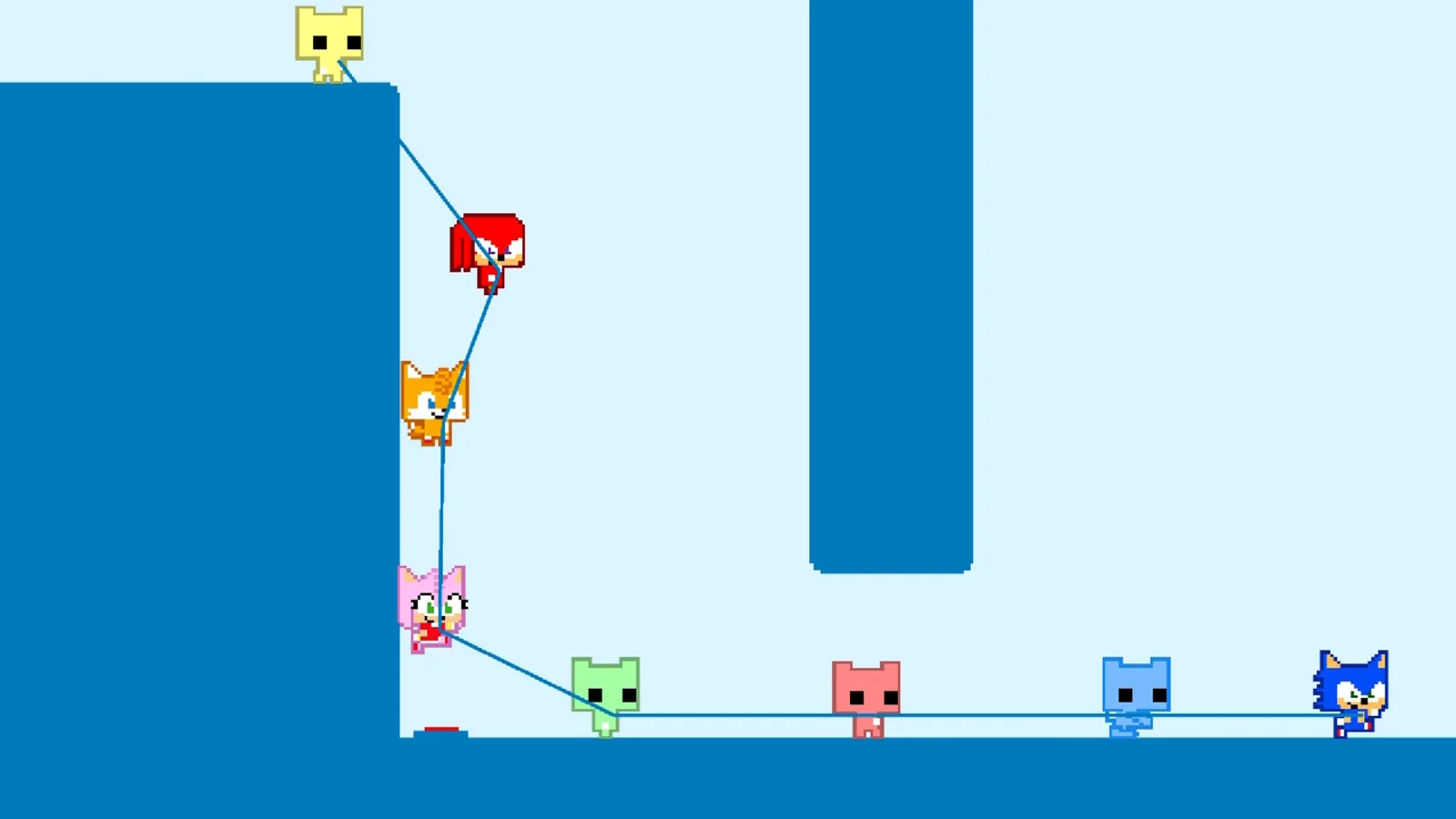
The fourth stage introduces the tether. Two characters are connected by a visible line, and the line limits how far apart they can move. The stage is a synchronization test: the pair has to move together, and one player cannot run ahead.
The solution
- Agree on a direction before moving.
- Move in short steps, not long runs.
- If the tether goes taut, stop and let the other player catch up.
- Use the tether's tension to judge distance; a taut line means the pair is at the limit.
- Cross the gaps as a pair, not one at a time.
The tether is not a hazard. It is a constraint that makes the pair act as one character. The stage is short, and the main skill is patience.
Common failure
The common failure is a player who keeps running when the tether is taut. The line pulls the pair apart, and one player falls. The fix is a rule: when the line is tight, the front player stops.
World 3 achievement
Clearing all four stages unlocks GO TOGETHER. The achievement is a world-clear milestone.
Co-op jobs for World 3
- Caller. Essential in the switch room. The caller says the number and confirms the press.
- Base. The bottom player in the wall climb. The base holds still and boosts the climber.
- Climber. The top player in the wall climb. The climber jumps straight up and finds the ledge.
- Tether lead. The front player in the tether stage. The lead sets the pace and stops when the line is taut.
In a two-player group, the same two players cover every job. In a four-player group, rotate the caller so one player is not doing all the counting.
What World 3 sets up
World 3 teaches the ordered-switch logic that returns in World 11's rule rooms, and the tether constraint that returns in the escort sections. The wall climb is a stacking variant, which returns in World 4's vertical rooms.
The World 4 guide → covers the carry world. The tips guide → covers the caller habit that makes switch rooms and tethers manageable.
Official source: SONIC PICO PARK official site ↗
Official source: Steam store page ↗
Siliconera's review ↗ covers the co-op puzzle design. MonsterVine ↗ describes the world's pacing. The Nintendo product page ↗ confirms the player range.
FAQ
How many stages are in World 3?
Four: 3-1 through 3-4.
How do you climb the wall in 3-1?
Use a partner as a step. One player stands against the wall, the other jumps on their head and then to the ledge.
How do you solve the numbered boxes in 3-3?
Press the boxes in order, 1 through 4. A wrong order resets the sequence.
What is the tether in 3-4?
A line that limits how far two players can separate. The pair has to move together.
What achievement does World 3 unlock?
GO TOGETHER.